skip to main |
skip to sidebar
Third Grade
Postcard Design
 At the beginning of the year, third graders drew an image of themselves, using basic ovals and circles, in a place they have visited or wish to someday visit. Many kids drew themselves at the beach, since that's such a popular summer destination. These drawings were done with sharpie and colored pencil.
Van Gogh Starry Night Landscape
 Vincent Van Gogh is endlessly fascinating to kids because of that bizarre ear incident, but his artwork is bursting with energy and life, even when no living things are in the image. Together, we talked about his painting, Starry Night, and created our own version with chalk, white paint, and construction paper. Kids took care to include a horizon line and add objects in the foreground and background.
Leaf Paintings


 I collected a variety of leaves for students to draw as fall arrived. We focused on using our observational skills and including tiny details like veins and jagged edges. These have crayon outlines and watercolor, creating a watercolor resist.Aztec Suns


 These wonderfully whimsical suns were built with coil construction of red earthenware clay and underglazes. Additional textures were added with small wooden clay tools, but you can get the same effect with toothpicks. As inspiration, we examined the Sun stone, which is believed to be like an ancient calendar.Sumi Paintings
 Done in the style of Asian sumi, these delicate paintings were created with watercolor and traditional bamboo brushes.
Egyptian Sarcophagus


 The Egypt unit is an exciting one for our third graders. They have lots of questions about the mummification process, and I used the sarcophagus of King Tut as an example. A fun way to introduce some of the archeological highlights is to read Bill and Pete Go Down the Nile, by Tomie de Paola. The project itself is paper mache, mounted on a sheet of tagboard, based on a scrunched newspaper and masking tape armature. Then, we painted the dried paper mache with gold tempera or acrylic. While the paint was drying, we touched on hieroglyphics and designed a cartouche in colored pencil. The next week, we added intricate symmetrical patterns, first in pencil, then with Sharpie markers.
Doodle for Google
 Each year, Google holds a competition for kids to design a "doodle" that will be displayed on the front page of the Google website. All grades participate, and these are some examples by third graders.
Down the Back of the Chair


 When I read Down The Back of the Chair by Margaret Mahy, I was so tickled that I had to try and use it in my art room! It's a hilarious poem about a family that discovers first simple, then peculiar, then plain insane things beneath the cushions of an innocuous chair. Third graders designed their own chairs with corrugated cardboard, construction paper crayons, and Sharpies. Can you tell I love Sharpies? The chair cushion is a little hinged book, and on each page is a small drawing of something "from down the back of the chair." The students chose some logical items such as keys, coins, or paper clips, and some wacky things like fairies, pirates, and rainbows. Squiggle Drawing
 This was just a sub activity, but the result was so lovely! All you need to do to make one is draw a controlled scribble, and begin coloring in all the shapes you discover as the lines intersect. We used marker, but this could easily be done with any coloring media.Sonobe Ball
 I didn't teach this, but one amazing kid did it entirely on his own. I put it in an art show because I was so impressed! There's no glue, only modular origami. This example is called Sonobe, and I can say from personal experience that it's very challenging!
Second Grade
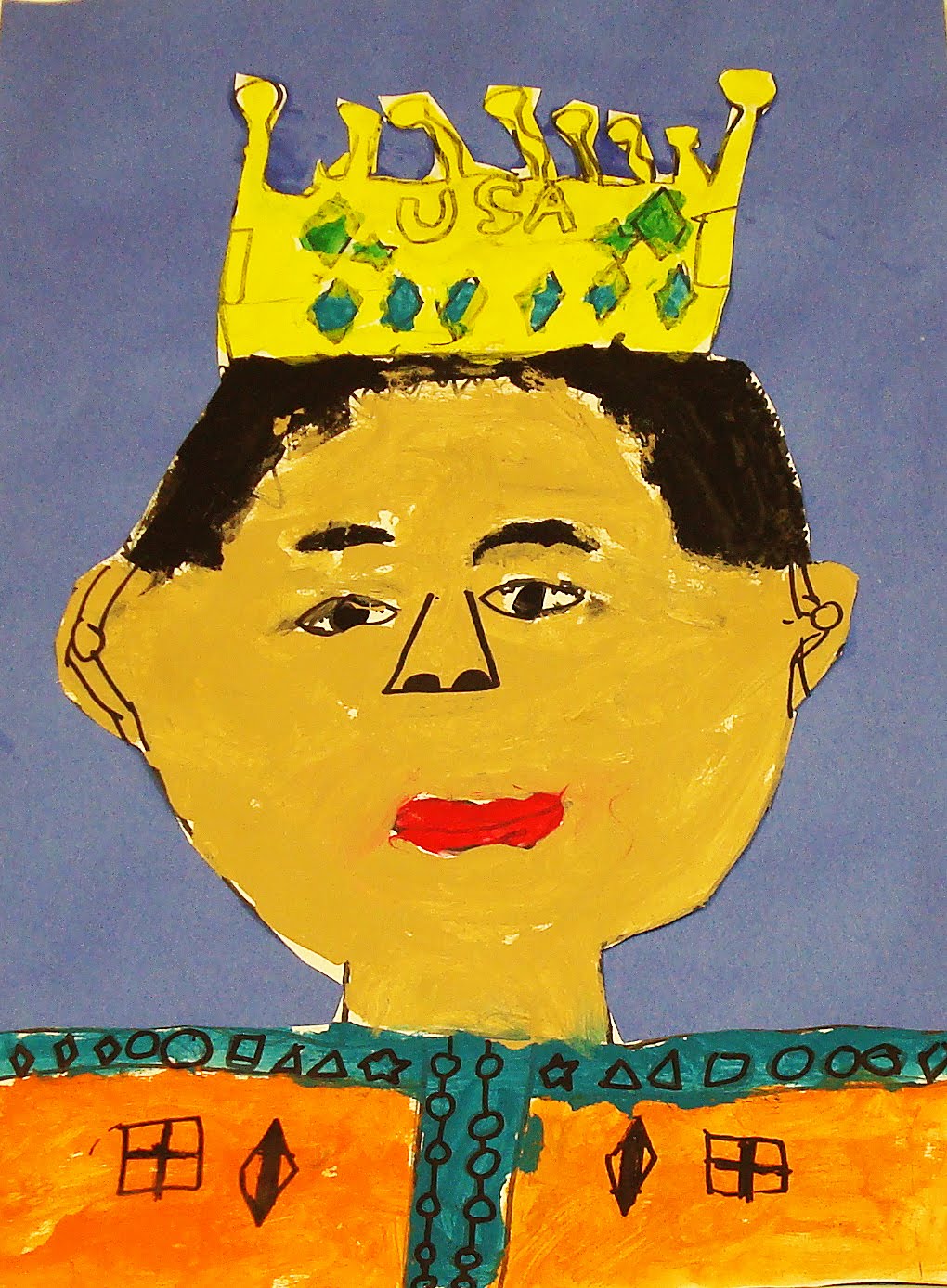
Royal Self Portraits
 The second graders' self portrait unit is a royal one. We still discuss adding detail to the face, but we also talk about where on the face our features usually reside. We draw in pencil, painted in tempera, and outlined in sharpie. Don't forget the bling!
Stained Glass Windows

 Looking at examples from gothic cathedrals, second graders learn about stained glass and symmetry. We folded black construction paper in half in order to get the pointed arch shape and interior cuts. The "glass" is tissue paper attached from behind with a glue stick or tape. Saint George and the Dragon- Shadow Puppets


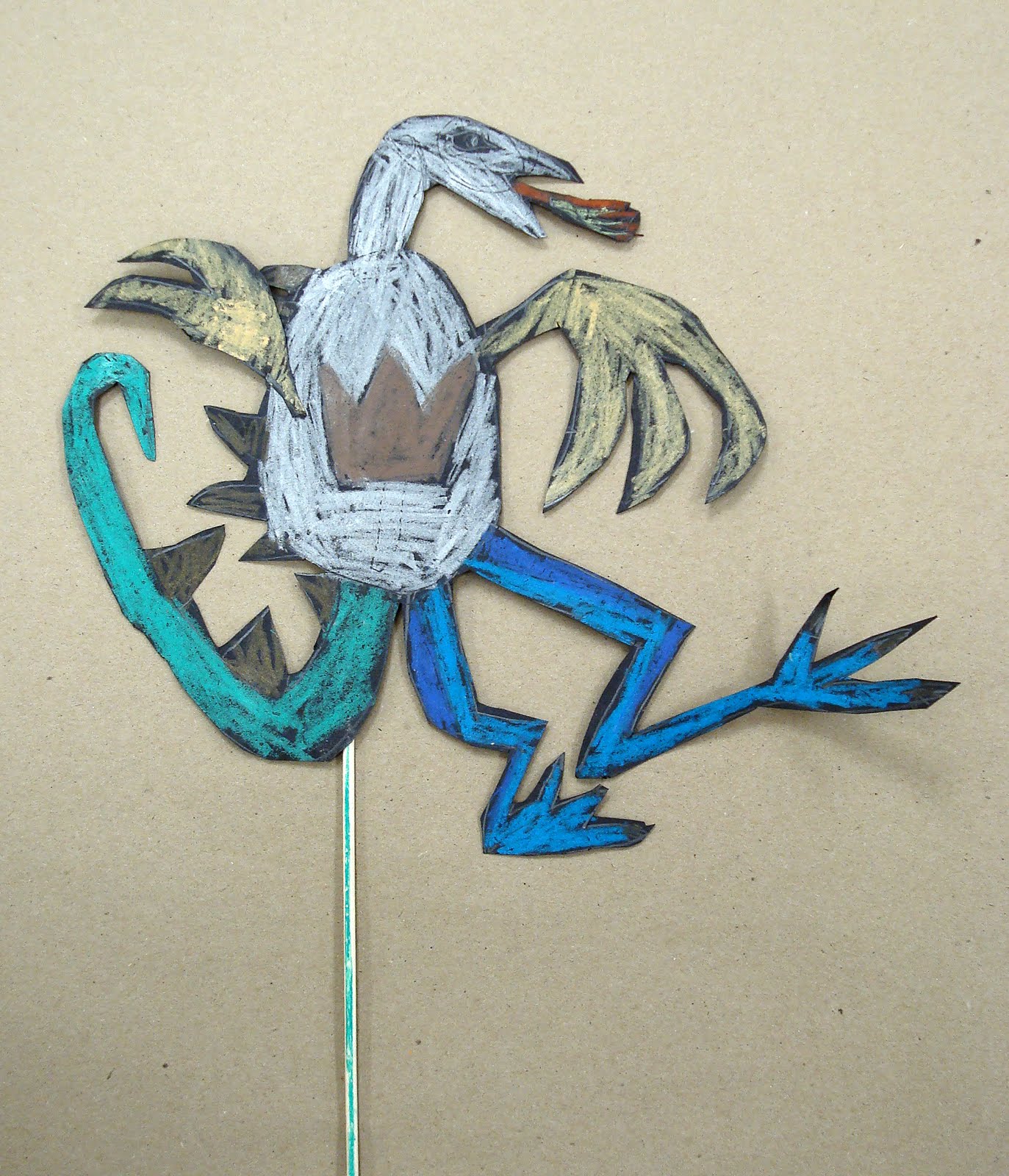
 First, we began by reading Tomie dePaola's The Knight and the Dragon, a variation on the tale of Saint George featuring a happy ending for the dragon as well as the humans. Students then created one of the four characters on black construction paper with pencil and construction paper crayon. We attached narrow dowels to the back to make them into shadow puppets. Since my classroom has a suspended ceiling, I used binder clips and paper clips to hang a long white sheet of bulletin board paper to serve as the puppet theater. The students then created a drawing of a setting and wrote their own version of Saint George for small groups to perform. Some of these stories were just wonderful- princesses throwing hissy fits or shopping, baby dragons hatching and making friends, all kinds of great ideas. I made sure to remind them that the story must describe actions characters are taking and words they say to each other, and it worked quite well. Faith Ringgold Quilt Squares
 As a class, we read Faith Ringgold's Tar Beach, observing the theme of family in her work. Then, we drew a picture of ourselves with someone special to us, usually a family member or a few friends. We colored using watercolor crayons, and then "turned crayon into paint" by brushing water across the crayon. Once it dried, the painting was glued to a larger square of cardboard, and the quilt-style border was added by gluing scrap fabric and beads.
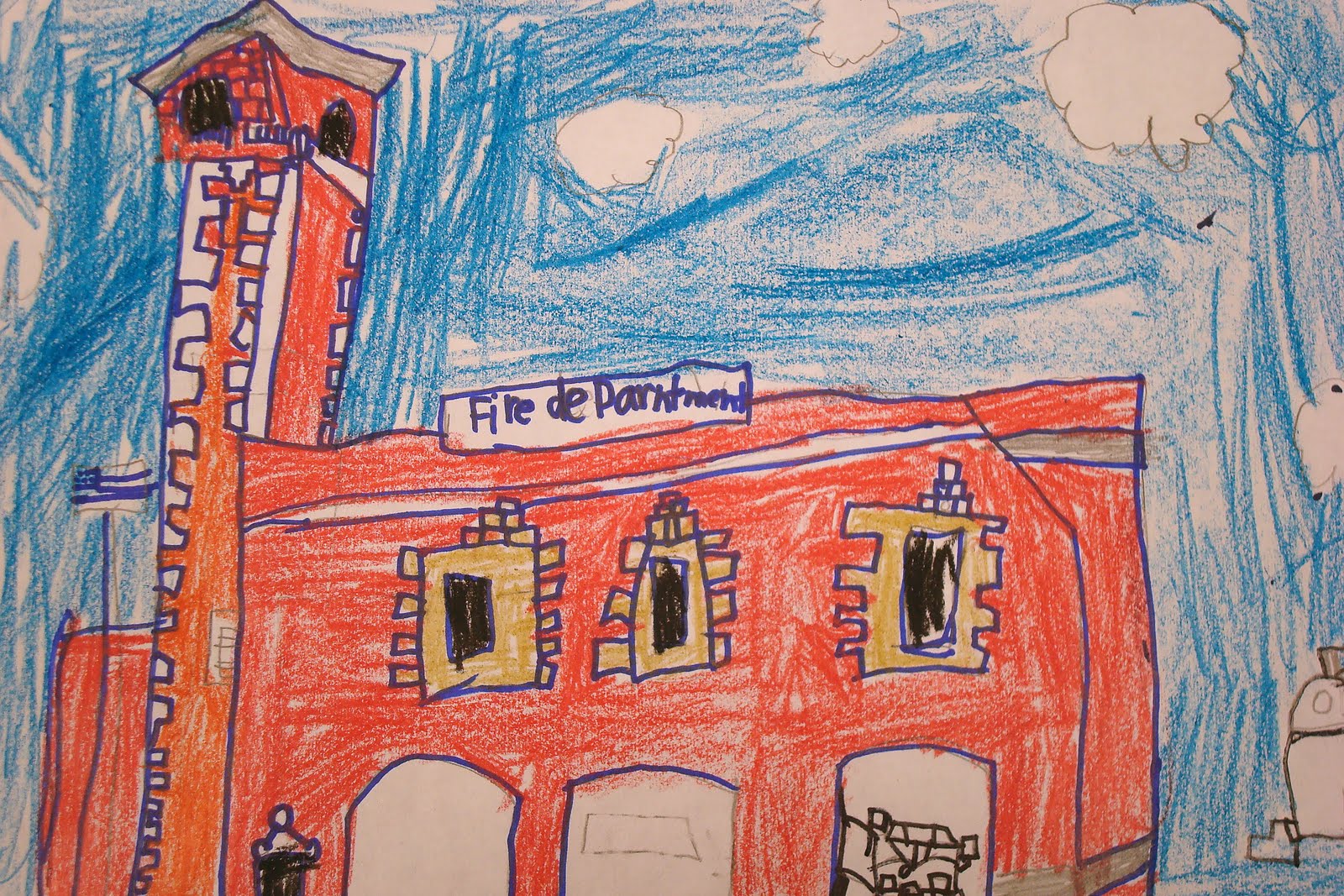
Small Town Drawing
 We used our own town as a theme for some drawings- I gave the kids lots of pictures to choose from and they did their best to copy the architecture of our area. Adding detail is again important here, the more the merrier when it comes to buildings.
Picasso Style Portrait Collage

 Second graders revealed their sense of humor when we made these collages! I told them that they needed to include at least one of all the parts of the face, but to be playful about where they put them. Pattern Drawing
 Using their own hands as a stencil, students drew "ripples" of the shape extending outward, off the page. These stripes were filled with repeating patterns. We used pencil to trace the first hand, but the rest was done entirely with marker. Stewart Davis Style City Collage


 This was one of my favorite projects, and it's new this year. We used construction paper, mirrorboard, corrugated paper, construction paper crayons, and sharpies to create a city on a wide sheet of brown kraft paper.
First Grade
Figure in Action

 I make sure every grade does some kind of self portrait, and the first grade creates a full body drawing. Using simple shapes like ovals and rectangles, we combine them into a complex shape, the human body. These were painted in watercolor. Monet Unit
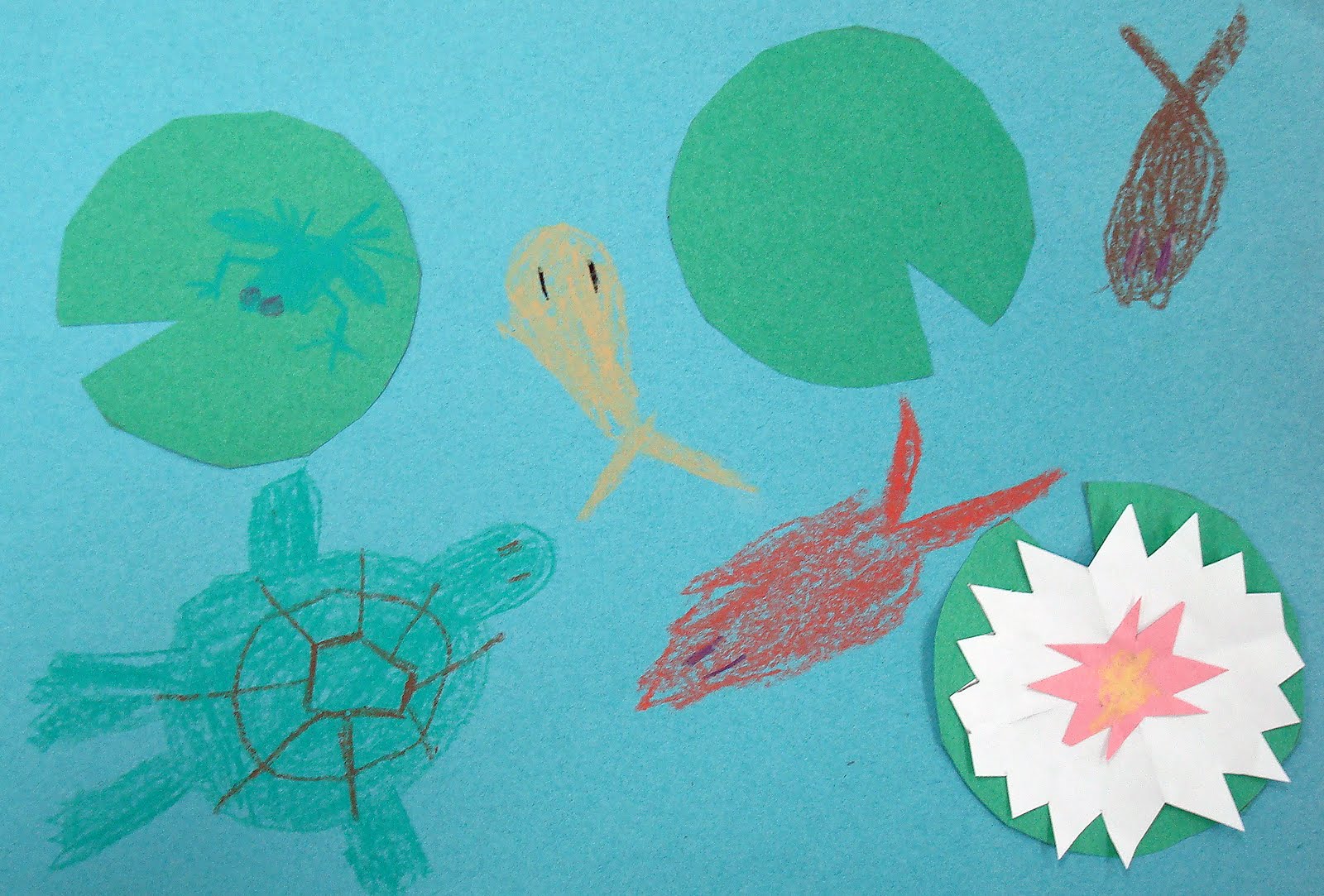
 The first graders learn about Claude Monet, first doing the tissue paper collage with oil pastel in the style of his water lily paintings. Then, we make something two dimensional a little bit three dimensional- the lilies in this bird's eye view are folded so they protrude off the page. We used construction paper crayons for the animals.
Observational Leaf Drawings 
 Using a variety of real leaves, students learned about contour drawing to make a beautiful drawing. First, we used pencil, then outlined in sharpie, and then, early finishers created lovely backgrounds with lots of crayon leaf rubbings surrounding the subject. Jasper Johns Collages
 Painter Jasper Johns is well known for using bright color and text in his paintings, so we borrowed from him by using students' initials in this colorful paper collage. Construction paper is the basis, but I also gave the kids some corrogated paper to add a bit of texture. Robots
 This was actually just a sub activity, but the results were so charming I put some up here. I left the book Nutsy the Robot Goes to School for the substitute teacher to read, some gray paper, sharpies, crayons, and some geometric shape tracers, and voila! Adorable. The concept of creating a complex shape using simple shapes as building blocks is important in art from kindergarten through adulthood. Ehlert Food Collage
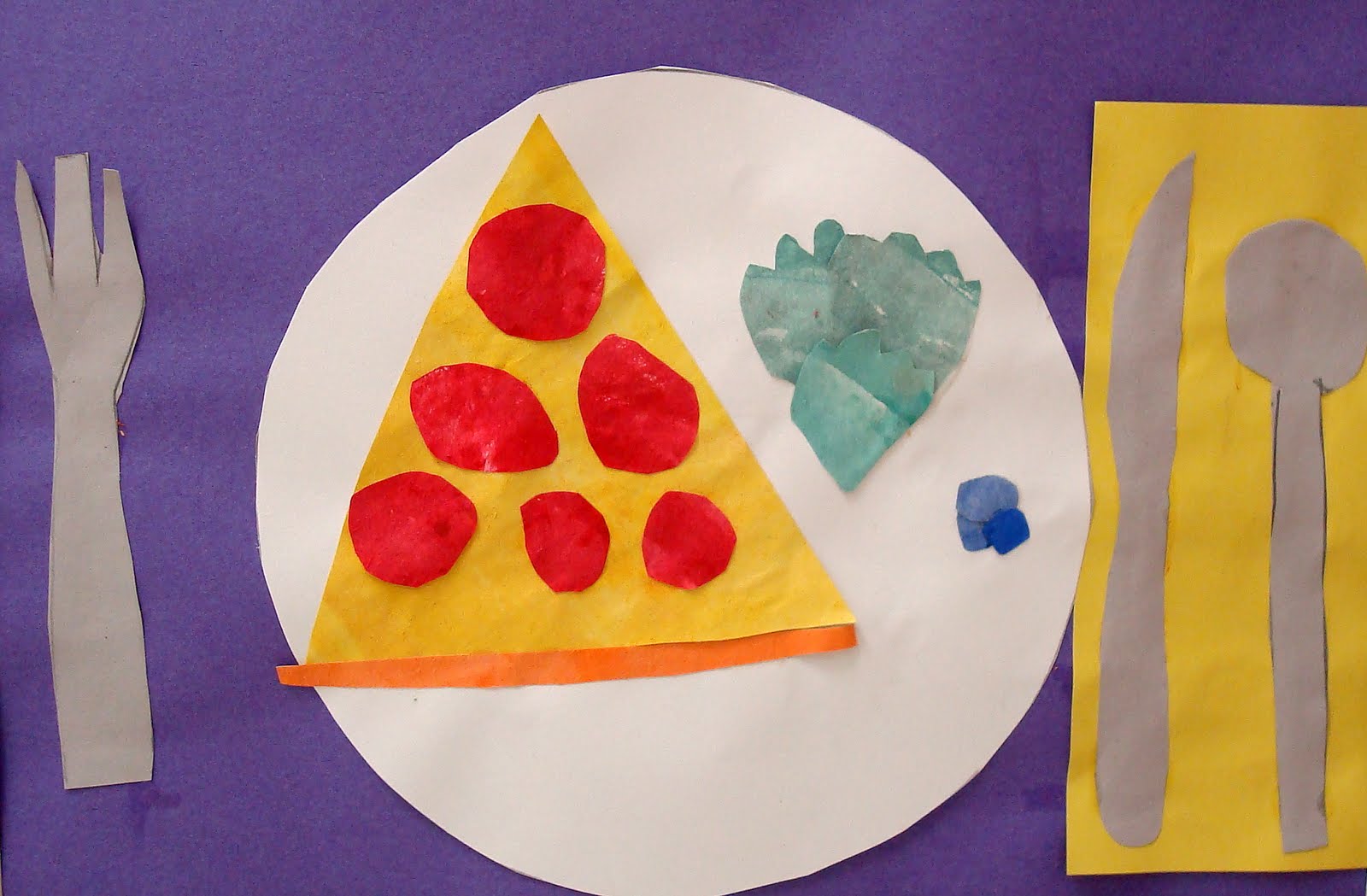
 I loved teaching this unit because it's so colorful and playful, there are a variety of art skills and media involved, kids feel very confident about what the subject looks like, and it gives us a chance to talk about nutrition as well as art. Lois Ehlert's BEAUTIFUL book, Eating the Alphabet, was the inspiration here. She created these illustrations with a technique similar to Eric Carle's, by making paintings, and then cutting shapes from the paintings to form the collaged illustrations. Clothesline Drawing
 Art teachers spend a lot of time and effort helping our students draw human beings, especially the face, but one important way we reveal our identities as people is our choice of clothing. So, for this project, we talked about observing and adding detail to clothes. I hung a real clothesline across the room and filled it with different articles of clothing to help make the drawings as realistic as possible. This drawing was done on a long piece of brown craft paper, using pencil, sharpie, and construction paper crayon.Audubon Birds
 With a little help from the media center, students learned about John James Audubon and created birds based on images in books. These were made from heavy cardstock, colored with crayon, and collaged with paper feathers. It would be even cooler if you have the money for real ones!